[vc_row type=”in_container” full_screen_row_position=”middle” column_margin=”default” column_direction=”default” column_direction_tablet=”default” column_direction_phone=”default” scene_position=”center” text_color=”dark” text_align=”left” row_border_radius=”none” row_border_radius_applies=”bg” overflow=”visible” overlay_strength=”0.3″ gradient_direction=”left_to_right” shape_divider_position=”bottom” bg_image_animation=”none”][vc_column column_padding=”no-extra-padding” column_padding_tablet=”inherit” column_padding_phone=”inherit” column_padding_position=”all” column_element_spacing=”default” background_color_opacity=”1″ background_hover_color_opacity=”1″ column_shadow=”none” column_border_radius=”none” column_link_target=”_self” column_position=”default” gradient_direction=”left_to_right” overlay_strength=”0.3″ width=”1/1″ tablet_width_inherit=”default” tablet_text_alignment=”default” phone_text_alignment=”default” animation_type=”default” bg_image_animation=”none” border_type=”simple” column_border_width=”none” column_border_style=”solid”][vc_column_text]
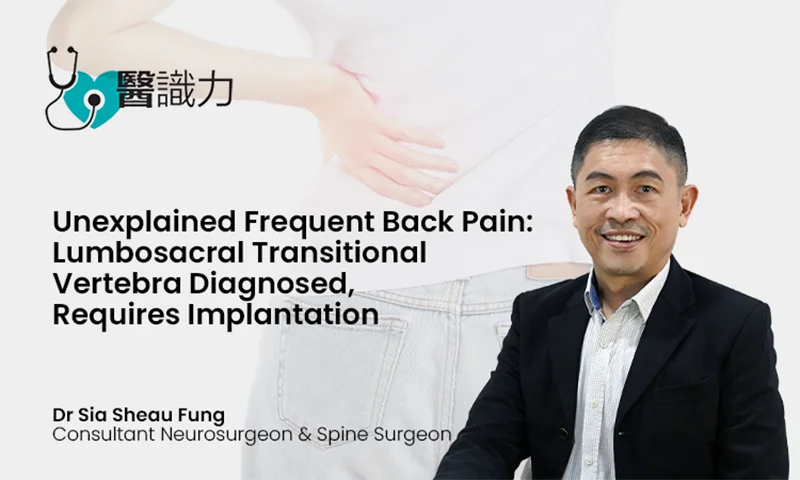
Bertolotti Syndrome occurs when a lumbar vertebra (L5) fuses with the sacrum (S1), leading to persistent lower back pain. Due to its nonspecific symptoms, it is often misdiagnosed or missed in clinical settings.
Naomi, a 42-year-old woman with persistent back pain and anxiety over her health, was initially misdiagnosed. Despite normal sensory and nerve conduction tests, her symptoms persisted, and it wasn’t until a CT scan revealed lumbar sacralization that Bertolotti Syndrome was correctly identified.
Treatment began with conservative methods like physical therapy and pain medication, but when these proved ineffective, surgery was performed. A titanium implant, commonly called a “jack,” was used to stabilize the spine. Post-surgery, Naomi experienced significant relief and could stand straight, marking a successful outcome for her condition.
[/vc_column_text][vc_column_text]
For full article, source: Sin Chew Daily[/vc_column_text][/vc_column][/vc_row]